
Generated editorial image.
Mouthwash does not replace brushing and cleaning between teeth. A rinse may have a useful role for a particular person, but it should be chosen for that purpose and used according to its directions. A fresh taste alone does not show that the spaces between your teeth are clean.
If you have started rinsing because flossing is awkward or uncomfortable, tell your dental team what makes it difficult. The next step is to find a suitable cleaning method, rather than assuming a bottle can take over the job.
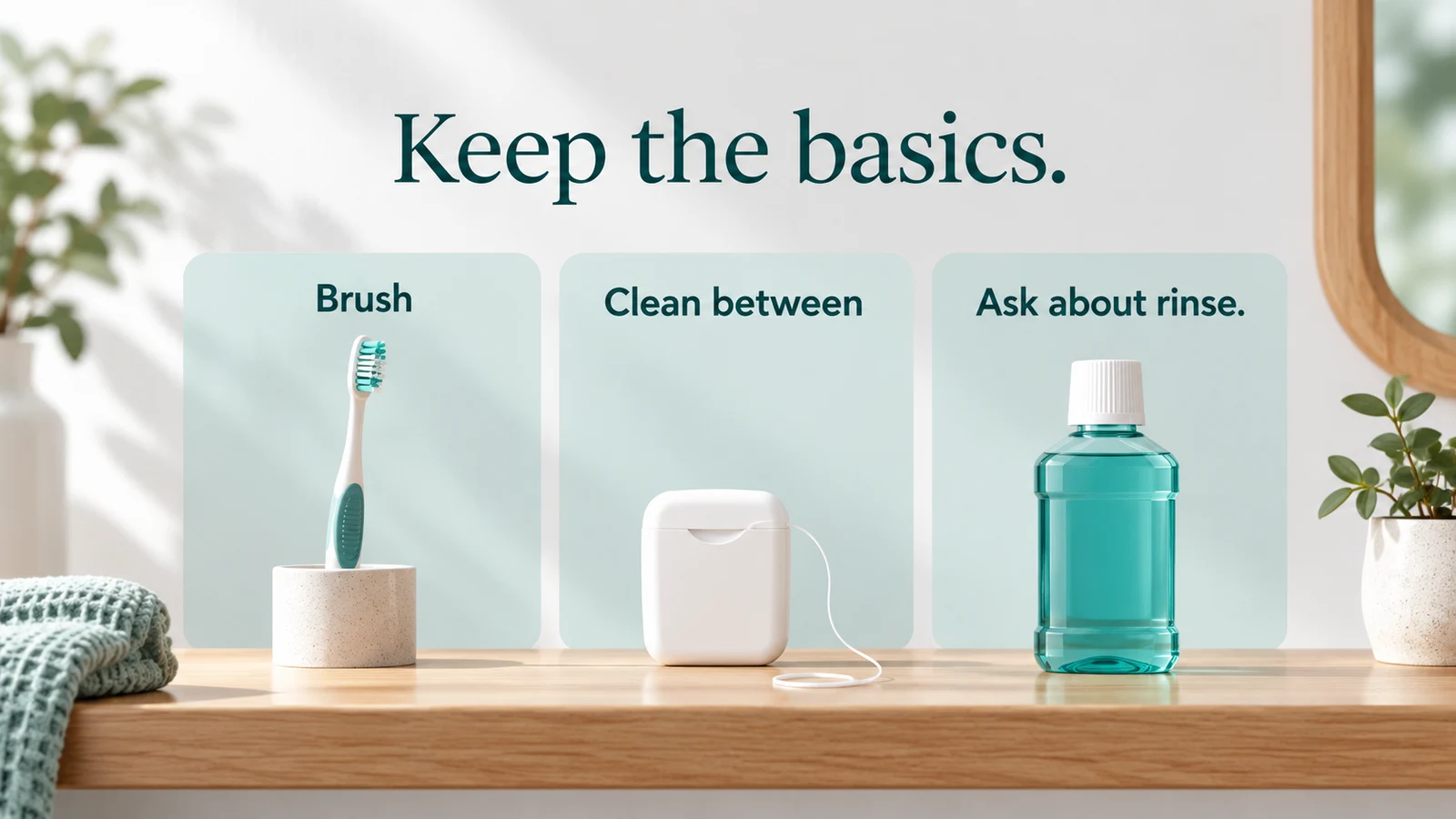
Keep physical cleaning in the routine
The American Dental Association describes mouthwash as a possible addition to daily care, not a substitute for brushing and flossing. Even a rinse with an active ingredient does not remove the need for your regular cleaning routine.
ADA guidance on cleaning between teeth includes floss and other interdental tools. Ask which option fits your teeth, restorations, hands and daily routine.
If string floss is difficult to handle, say exactly where you get stuck. For example: “I can reach the front teeth but not the back,” or “It catches beside this crown.” These details help the team choose and demonstrate a method. Do not force a tool through a tight or painful area.
Ask what a rinse is intended to do
Rinses have different purposes. The ADA distinguishes cosmetic rinses, which may temporarily freshen breath, from therapeutic products with active ingredients directed at a specific oral-health concern. Fluoride rinses and other therapeutic rinses are not all interchangeable.
Before adding one, ask:
- Do I need a rinse for a particular reason?
- What ingredient and product type are you recommending?
- What should I realistically expect it to help with?
- How does it fit with my toothpaste and other products?
- When should we review whether I still need it?
Bring the name or a photograph of the bottle you already use. A brand can sell several formulations, so identifying only the brand or color is not enough.

Follow the directions for that product
Confirm the amount, frequency and any timing instructions from the label or prescribing clinician. Do not double the amount, extend use or combine rinses in the hope of getting a stronger effect. Never swallow a rinse.
Some products require a prescription. Do not borrow someone else’s prescribed rinse or assume an old prescription is appropriate for a new symptom. Ask the team before adding another product to a prescribed routine.
Follow the age limits on the label. The ADA says mouthwash is not recommended for children younger than six because they may swallow it. For a child, seek age-appropriate advice rather than applying an adult routine.
Do not use a rinse to hide a recurring problem
If you have persistent bad breath, bleeding, soreness or a dry mouth, mention the symptom even if a rinse temporarily changes the taste or smell. A product’s effect does not identify the cause.
If rinsing stings or seems to worsen dryness, stop using that nonprescription product and ask for advice. For a prescribed rinse, contact the prescribing team promptly about adverse effects and follow its instructions. Seek urgent help for signs of a serious allergic reaction, such as swelling with difficulty breathing.
A simple note can help: the exact product, how often you use it, when the symptom started and what changed. There is no need to try several new products before arranging an assessment.
Build a routine you understand
Before leaving your visit, make sure you know how to brush, how to clean the spaces between your teeth and whether a rinse has a defined role. Ask for a demonstration if any step remains unclear.
Brock Cameron, DMD provides family dental care. Contact the office with questions about your routine or review its services. The aim is a practical, individualized plan with each product doing the job it was chosen for.

We use modern dentistry to help address your dental needs by always staying current with treatment options that help provide each unique patient with the care that they need.
Contact Us
675 Old Ballas Rd. Suite 205
St. Louis MO 63141
Call Us
Copyright © 2025 Brock Cameron DMD.