
This is general education. Your needs may differ. Please ask your dentist.
When you search for a "dental crown filling," you might be looking for a way to fix a cavity or wondering if an old filling needs to be replaced by a crown. It is important to start with a clear distinction: a filling and a crown are different tools used for different levels of damage.
A filling is used to treat a small or moderate cavity by removing the decay and filling the space with a restorative material. A crown, on the other hand, is a cap that covers the entire visible portion of the tooth to protect it from fracturing and to restore its full strength. NIDCR's patient resource on tooth decay is a useful outside reference for cavity-related sensitivity.
The most common mistake patients make is not understanding when a filling is no longer the right choice and a crown is needed. Choosing the wrong restoration, or waiting too long to upgrade a failing filling, can lead to more complex dental work later.
Common Causes of Filling and Crown Issues
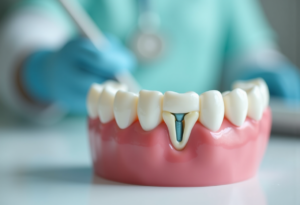
Dental restorations do not last forever. Several factors can cause a filling to fail or a tooth to require a crown instead of a simple patch.
- Recurrent Decay: This happens when new bacteria leak under the edge of an existing filling. Because the decay is hidden, it can eat away at the healthy tooth structure without causing immediate pain.
- Mechanical Stress: Teeth that grind or clench put immense pressure on fillings. Over time, this pressure can cause the filling material to crack or the surrounding tooth wall to fracture.
- Wear and Tear: Every material has a lifespan. Whether it is a composite resin or a silver amalgam, the material eventually wears down or loses its seal.
- Large Initial Cavities: If a cavity was very large, the remaining natural tooth structure may be too thin to support a filling, making the tooth prone to breaking under the pressure of chewing.
Mistake 1: Ignoring "Minor" Sensitivity
What you may be doing: You notice that cold water or sweet foods cause a sharp, brief zing in a tooth that already has a filling. You assume it is just a temporary sensitivity and continue to ignore it for several months. The American Dental Association's MouthHealthy guide also explains common causes of sensitive teeth.
Why it matters: Sensitivity is often the first warning sign that the seal between your filling and your tooth has failed. When a gap forms, bacteria and fluids reach the inner layer of the tooth. If you wait until the tooth actually hurts, the decay may have progressed deep enough to require a root canal rather than a simple crown or filling replacement.
What to do instead: Treat any new or returning sensitivity as a signal to schedule a checkup. A quick exam and X-ray can identify if a filling is leaking before the damage becomes extensive.
Mistake 2: Over-Relying on a Large Filling
What you may be doing: You have a very large filling that takes up a significant portion of the tooth. You feel that as long as the filling is still there and not falling out, the tooth is "fixed."
Why it matters: Fillings provide a seal, but they do not provide structural support. In fact, a very large filling can act like a wedge. When you chew, the filling can put pressure on the remaining thin walls of the tooth, increasing the risk of a vertical fracture. A fracture that extends below the gum line can sometimes lead to the loss of the tooth entirely.
What to do instead: If your dentist mentions that a filling is "too large" for the remaining tooth structure, consider a crown. A crown encircles the tooth, holding it together and distributing the pressure of chewing evenly across the entire surface.
Mistake 3: Neglecting the "Margins"
What you may be doing: You focus on the top of the tooth and the overall look of your smile, but you ignore the area where the filling or crown meets the natural tooth (the margin).
Why it matters: The margin is the most vulnerable part of any restoration. If plaque builds up at the edge of a filling or crown, bacteria can seep underneath. This is where recurrent decay starts. Because these gaps are often microscopic, you cannot see them in the mirror, but they can compromise the entire restoration.
What to do instead: Maintain a rigorous home care routine. Use a gentle floss or an interdental brush to clean the edges of your restorations. Regular professional cleanings at a family dentist in Town and Country help remove the hardened tartar that you cannot reach at home, protecting those critical margins. The CDC's overview of oral health supports the prevention advice in this section.
Signs Your Filling May Need a Crown
It can be difficult to tell if a filling is simply failing or if the tooth now requires a crown. Look for these specific red flags:
- Visible Cracks: Small lines appearing in the tooth or the filling material.
- Frequent Chipping: If pieces of the filling or the tooth keep breaking off during normal eating.
- Persistent Sensitivity: Pain when biting down or reacting to temperature changes.
- Rough Edges: A feeling that the filling is "catching" on your tongue or cheek.
- Darkening: Discoloration around the edges of the filling, which may indicate decay.
How Dentists Diagnose the Need for a Crown
When you visit our office in St. Louis, MO, we use a specific diagnostic process to determine if a filling is sufficient or if a crown is the safer long-term option.
First, we perform a visual exam and use a dental explorer to check the integrity of the filling's edges. We check for "soft spots" that indicate decay. Next, we use digital X-rays to see how deep the decay goes and how much healthy tooth structure remains.
We also consider the tooth's location. For example, molars handle much more chewing pressure than incisors. If a molar has a large filling on the biting surface, a crown is often recommended to prevent the tooth from splitting under pressure. We discuss these findings with you, explaining the trade-offs between a new filling and a crown so you can make an informed decision.
Treatment Options and Trade-offs
Depending on the state of your tooth, there are generally three paths forward:
1. Filling Replacement
If the decay is minimal and the tooth structure is strong, we can remove the old filling and place a new one. This is the most conservative approach. However, if the cavity was already large, another filling may not provide the necessary strength.
2. Dental Crowns
If the tooth is weakened or has a large existing filling, a crown is the best way to protect the tooth from breaking. The process involves shaping the tooth, taking an impression, and placing a custom-made cap over the top. This provides 360-degree support.
3. Implant Crowns
In cases where the tooth is too damaged to be saved by a crown or filling, an implant crown may be the solution. This involves placing a titanium post in the jawbone to act as a root, topped with a custom crown to restore full function and appearance.
Recovery and Long-Term Maintenance
Whether you receive a new filling or a crown, the goal is to ensure the restoration lasts for years.
Immediate Aftercare: After a filling or crown placement, you may experience mild sensitivity to hot or cold. This is normal. Avoid extremely hard foods (like ice or hard candy) for the first few days while the adhesives set fully.
Daily Habits:
- Brush twice daily: Use a fluoride toothpaste to strengthen the remaining natural tooth structure.
- Floss daily: This is the only way to clean the margins where the crown or filling meets the tooth.
- Avoid "Using Your Teeth as Tools": Do not use your teeth to open packages or crack nuts, as this can fracture even the strongest crowns.
Professional Care: Regular dental checkups are essential. During a visit, your dentist can check for gaps or leaks in your restorations that are not yet causing pain. Early detection of a failing filling allows for a simple repair instead of a complex crown replacement.
When to Call Your Dentist
While some sensitivity can be normal, certain symptoms require a prompt appointment. Call your family dentist in St. Louis if you experience:
Call the office sooner when you notice:
- Sharp pain when biting or chewing.
- Sensitivity that lasts more than a few days or keeps coming back.
- Swelling, a broken tooth, or a loose filling or crown.
- Pain that wakes you up or feels worse instead of better.
- A filling or crown that feels loose or wiggles.
- A sharp piece of a filling that has broken off.
- Pain that keeps you awake at night.
- Swelling in the gums around a restored tooth.
- A sudden, intense reaction to cold or heat that does not go away immediately.
Frequently Asked Questions
Can a filling be turned into a crown?
How long do dental crowns typically last?
Why is a crown more expensive than a filling?
Will I feel pain during the replacement of a filling?
Can I get a filling if I have a crack in my tooth?
Does insurance typically cover crowns and fillings?
How do I know if my filling is leaking?

We use modern dentistry to help address your dental needs by always staying current with treatment options that help provide each unique patient with the care that they need.
Contact Us
675 Old Ballas Rd. Suite 205
St. Louis MO 63141
Call Us
Copyright © 2025 Brock Cameron DMD.