
Generated editorial image.
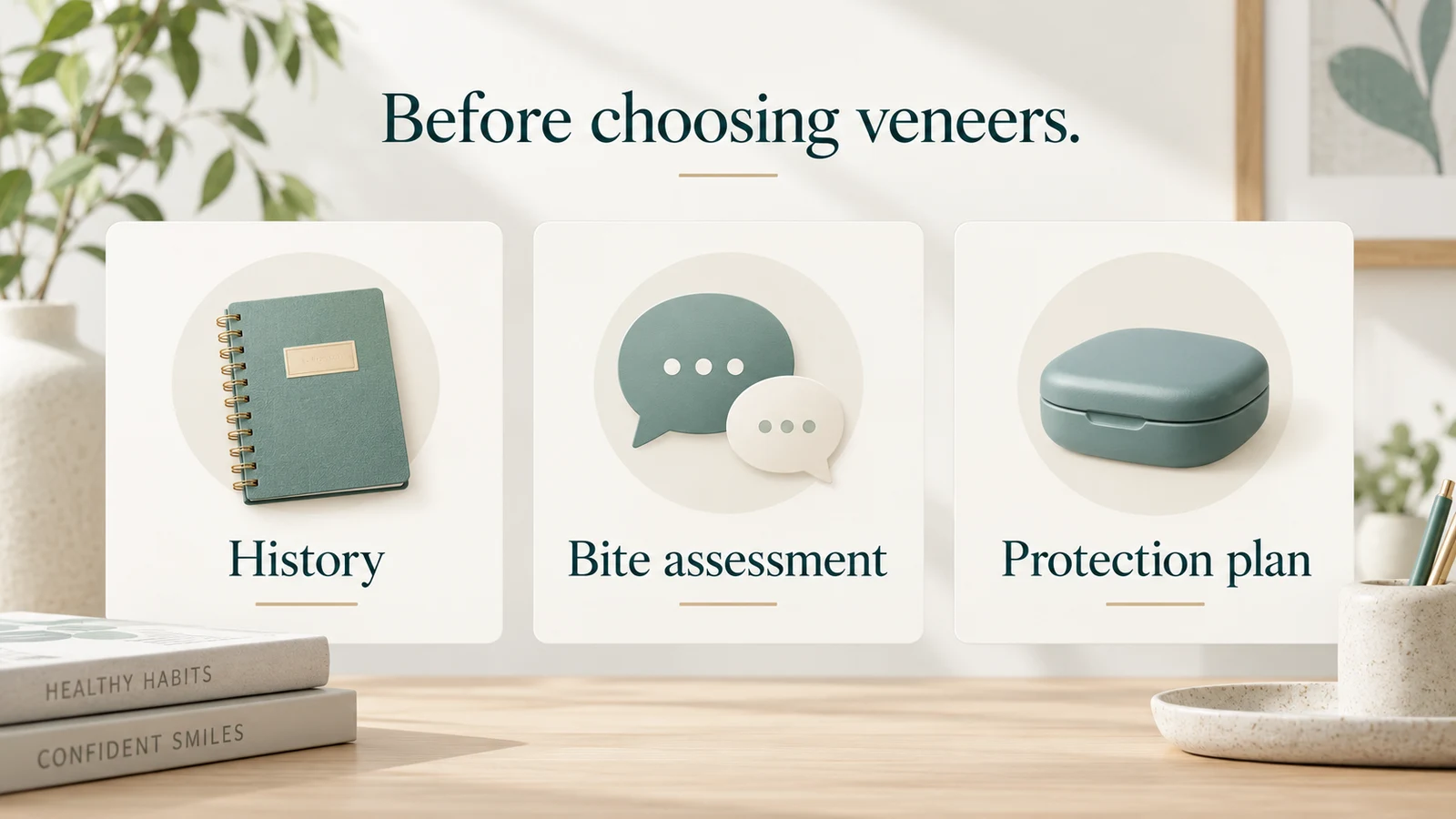
Grinding or clenching is an important part of deciding whether veneers are suitable. It does not give you an automatic yes or no. Tell the dentist about any known grinding, tooth wear, damaged restorations or appliance use before discussing the appearance you want to change.
The American Dental Association cautions that veneers may not be a good choice for people who clench or grind their teeth. A personal assessment should come before choosing a material, shade or treatment date.
Describe what you know about grinding
According to NIDCR’s bruxism guidance, grinding and clenching can happen while awake or asleep. Assessment includes a history and examination. Tooth wear, sensitivity or a tired jaw alone cannot establish the cause.
Bring useful observations rather than trying to diagnose yourself. For example, say whether a clinician previously identified grinding, whether a sleeping partner has noticed sounds, or whether you catch yourself clenching during the day.
Also mention earlier chips, cracked restorations, jaw discomfort and any appliance you use. If an old veneer failed, explain when and how it happened without assuming grinding was the reason.
Ask how the findings affect your options
A veneer changes the front surface of a tooth. It does not remove the need to evaluate the tooth’s health or how the teeth meet. Ask the dentist to explain which findings matter in your case and whether any concern should be addressed before cosmetic treatment.
Questions to take to the appointment include:
- What does the examination show about wear and my bite?
- How does that affect whether veneers are appropriate?
- Would postponing cosmetic treatment help clarify the situation?
- What other ways of addressing my appearance concern are reasonable?
- What are the limitations of each option?
Keep the goal specific. Changing a dark area, a tooth shape or an uneven edge may lead to different discussions. Photographs can illustrate your preference, but they cannot establish suitability or promise the same result.
Understand what a protection plan can and cannot do
NIDCR describes intraoral guards as one option for protecting teeth from grinding and clenching forces. That does not mean a guard makes every person a veneer candidate or guarantees that a restoration will never chip.
If an appliance is proposed, ask about its purpose, fit, wear instructions and follow-up. Tell the clinician if you already wear a retainer, nightguard or another prescribed device. Ask how those instructions would work together after treatment.
Do not buy or modify a device on the assumption that it will solve the suitability question. An existing appliance may need review if tooth shapes change. Do not force it over new restorations, heat it or trim it at home.
Include maintenance in the decision
The ADA notes that veneers can chip, wear or loosen and may need professional attention over time. Discuss that possibility before committing, including what an assessment or repair might involve and which costs are uncertain.
Ask what changes should prompt a call: a different bite, a rough edge, movement, sensitivity or difficulty wearing an appliance. A plan should explain what to do when something changes, rather than relying on an expected lifespan.
If you are unsure about treatment, ask for the findings, alternatives and next step in writing. You should be able to explain why an option is being recommended, not just what it is expected to look like.
Start with an individual consultation
Brock Cameron, DMD lists crowns and veneers and dental appliances among its services. These service listings do not establish that veneers or a particular guard are right for you.
Contact the office to discuss your history and appearance goals, or review its dental services. Suitability, protection and ongoing care belong in the same conversation.

We use modern dentistry to help address your dental needs by always staying current with treatment options that help provide each unique patient with the care that they need.
Contact Us
675 Old Ballas Rd. Suite 205
St. Louis MO 63141
Call Us
Copyright © 2025 Brock Cameron DMD.