
Generated editorial image.
A sports mouthguard and a nightguard are chosen for different jobs. Do not assume an appliance you wear for grinding is suitable for sports, or that a sports guard is the right device for overnight use. Ask your dental clinician which appliance is appropriate for each activity.
The names can be confusing because both are sometimes called “mouthguards.” The most useful question is, “What is this particular appliance designed and prescribed to do?”
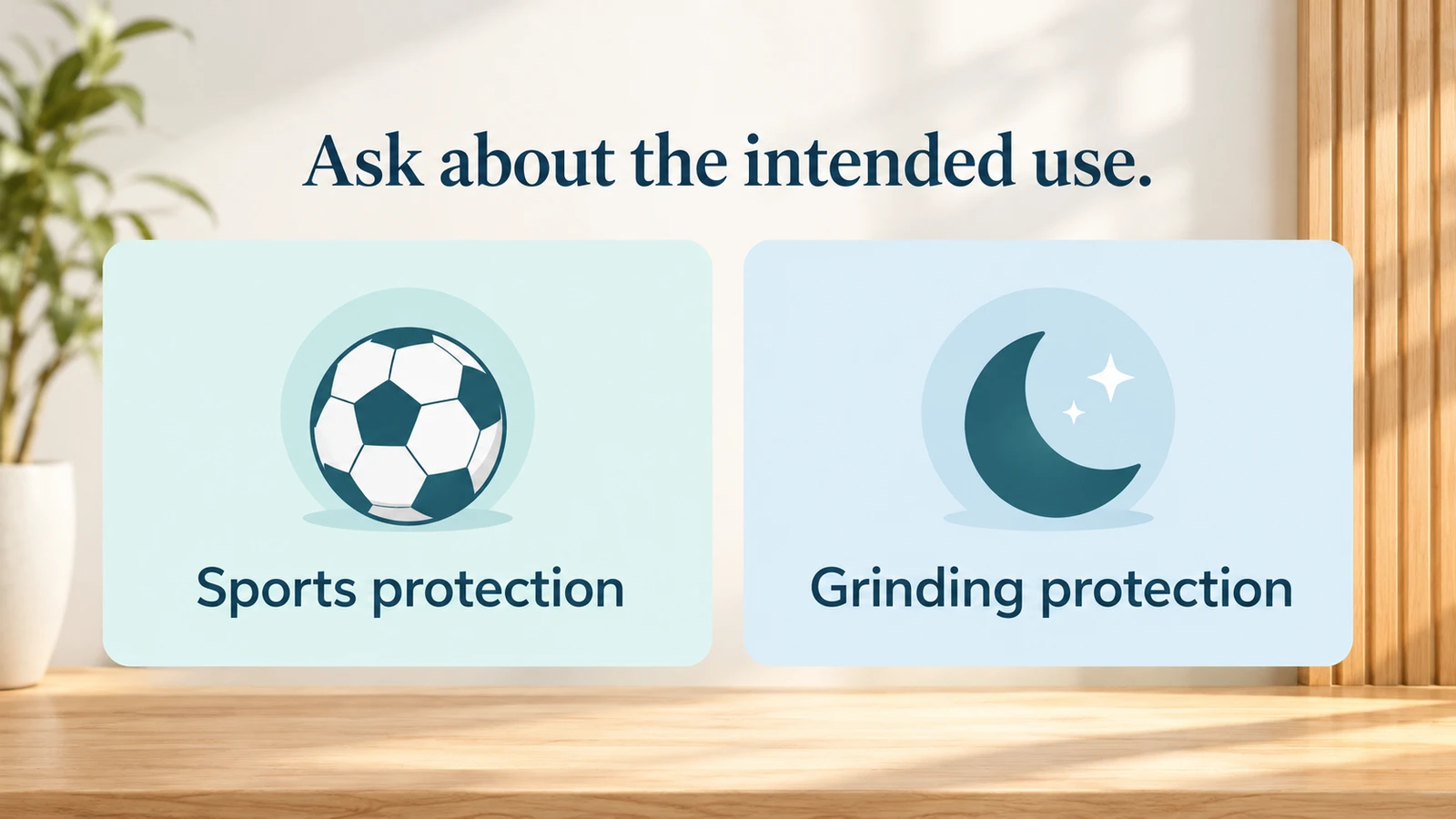
Start with the purpose of the appliance
The American Dental Association describes sports mouthguards as devices that help cushion blows and reduce the risk of dental and mouth injuries. Fit matters, including when a person has braces or fixed bridgework. No guard can guarantee that an injury will not happen.
For bruxism, NIDCR describes intraoral guards that separate the teeth to help protect against grinding and clenching forces. That purpose does not establish suitability for an impact during sport.
Keep the intended use clear rather than judging by color, thickness or whether two devices look similar. A sports shop description, an old appliance or a photograph cannot confirm that an item meets your individual needs.
Bring the activity into the discussion
Tell the dentist which sport or activity you do, how often you participate and whether you have a current mouthguard. Mention braces, bridges, crowns, loose teeth, recent treatment or any appliance you already wear.
Questions worth asking include:
- What protection is appropriate for this activity and my teeth?
- Is the appliance I already own intended for that use?
- How should a suitable guard feel when speaking and breathing?
- What should I do if it is loose, uncomfortable or difficult to keep in place?
- Should my orthodontic clinician be involved?
If a team or organization has equipment rules, bring them. The dental discussion and the sport’s participation requirements are both relevant; neither should be guessed from a general article.
Do not swap appliances or modify the fit yourself
Ask for an explicit answer before using one device in place of another. Do not trim a prescribed nightguard, add material, glue a damaged guard or use heat to reshape an appliance that was not designed for that process.
The ADA describes several sports-guard categories, including custom-made, stock and manufacturer-directed boil-and-bite products. Those categories do not mean any appliance can safely be heated. Follow the directions for the specific product and ask the clinician when uncertain.
The ADA also advises that removable retainers should not be worn during contact sports. If you wear a retainer, ask your orthodontic clinician how sports protection and your retention instructions should work together.
Review the plan after dental changes
If you have a new crown, other restorative work or a change in how your teeth meet, tell the clinician who manages your appliance. Ask whether it needs assessment before you continue using it. Do not force an old device over a changed tooth shape.
For a sports guard, the ADA recommends review when it becomes damaged or ill-fitting and bringing it to dental checkups. Ask what signs apply to your specific device and what to do while a replacement is arranged.
Keep care instructions with the correct appliance. The cleanser, storage and wear instructions for one device should not automatically be transferred to another.
Confirm what the office provides
Brock Cameron, DMD’s appliance service page describes guards for grinding and retainers. Contact the office to ask about your sports-protection needs and whether it provides the specific service or recommends another source of care.
Before a visit, ask whether to bring every appliance you currently use. You can label the cases with the purpose and provider so the discussion stays clear.
Contact Brock Cameron, DMD with appliance questions or review its services. The practical goal is an appropriate, well-understood plan for each use, without assuming one device can do every job.

We use modern dentistry to help address your dental needs by always staying current with treatment options that help provide each unique patient with the care that they need.
Contact Us
675 Old Ballas Rd. Suite 205
St. Louis MO 63141
Call Us
Copyright © 2025 Brock Cameron DMD.