
Generated editorial image.
A stain-removal toothpaste and dentist-directed tray bleaching work in different ways. One focuses on stains on the tooth surface; the other uses a bleaching product as part of an individual plan. Before choosing, ask what is causing the color you notice and what kind of change is realistic.
The word “whitening” appears on many products, so read the exact label rather than assuming everything in that category does the same job. Some products marketed as whitening toothpastes include bleaching ingredients.
Start with the change you want to make
Tell the dentist whether you are concerned about general dullness, surface staining, one darker tooth or uneven color around dental work. Mention when you noticed it and which products you have tried.
A new color change after an injury, pain or sensitivity deserves assessment before a cosmetic experiment. A photograph can help describe your concern, but it cannot establish the cause or predict a result.
Ask whether an examination or routine cleaning should come first. You may find that the most useful question is “What are we trying to change?” rather than “Which product is strongest?”
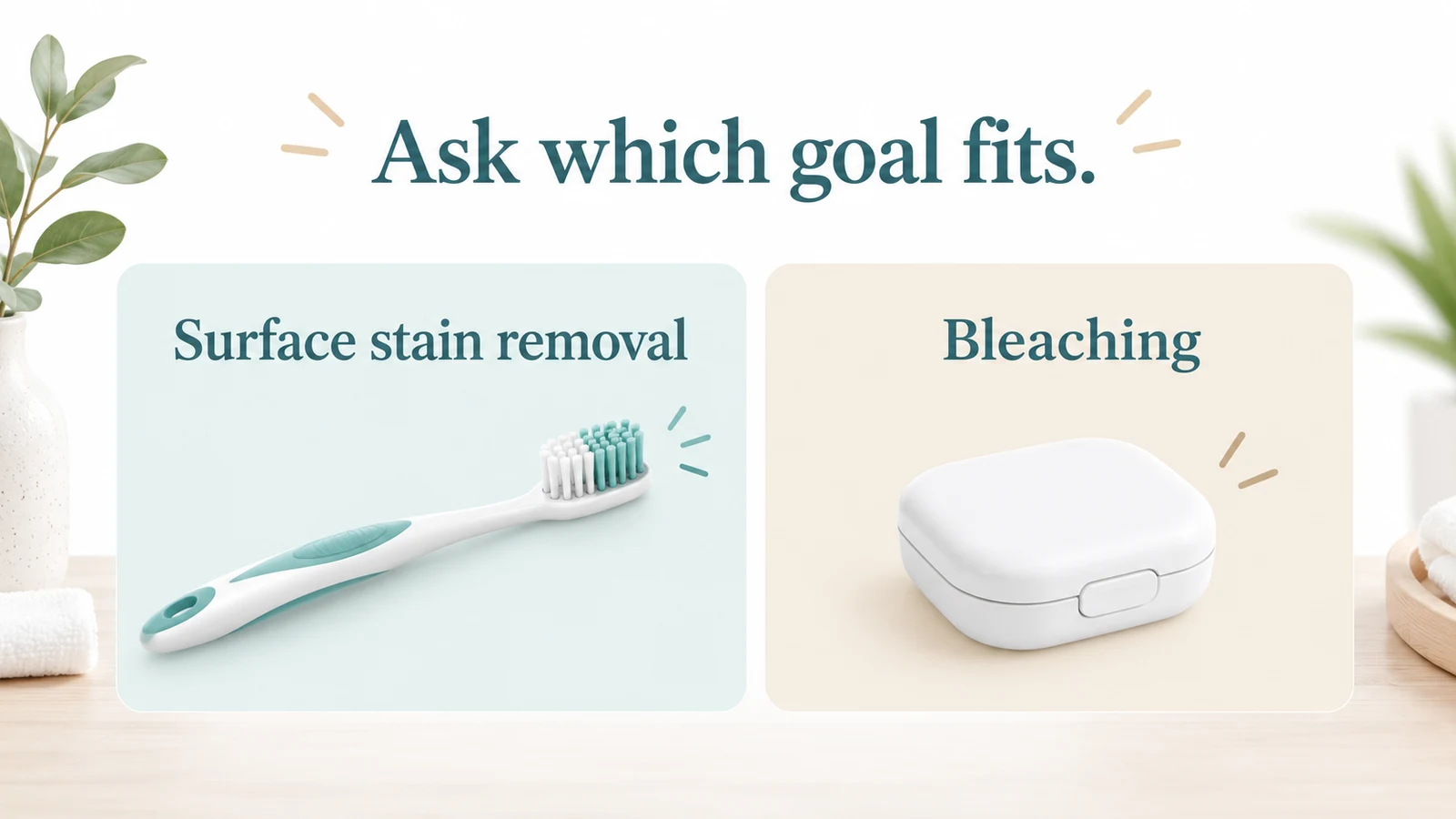
Understand the surface-stain category
The American Dental Association describes stain-removal toothpastes as using polishing ingredients to remove external stains. That category does not bleach the underlying tooth color.
This distinction applies to the product category, not every tube carrying the word “whitening.” Check the ingredient list and product claim with the dental team if you are unsure whether you are looking at stain removal or bleaching.
Do not brush harder or longer than advised to make a product work faster. Ask whether the toothpaste also meets your everyday fluoride and sensitivity needs, and use the directions for the actual formulation.
Ask how custom tray bleaching would work for you
The ADA describes dentist-provided custom trays as one way to use bleaching solution at home with professional instructions. The dentist should specify the product, application and wear time for that plan.
Brock Cameron, DMD’s whitening service page confirms custom-made whitening trays. Ask whether you are a suitable candidate and what the office recommends for your teeth. This does not establish that every type of discoloration will respond.
Questions worth asking include:
- What change is realistic for the color concern I have?
- How do existing crowns, veneers or fillings affect the plan?
- Which product and instructions belong with my trays?
- What should I do if sensitivity or gum irritation occurs?
- How will we decide whether and when any further use is appropriate?
Whitening does not change the color of existing crowns, veneers or fillings in the same way as natural teeth. Discuss potential mismatches before treatment; healthy restorations should not automatically be replaced simply to chase a shade.
Avoid mixing routines or improvising stronger treatment
Do not combine several bleaching products, add extra gel or extend tray wear without instructions. If a product causes discomfort, pause the whitening and contact the dental team for advice instead of pushing through it.
The ADA warns about acidic and abrasive DIY whitening approaches. Lemon juice, vinegar and rough homemade scrubs are not substitutes for a tested product and can harm tooth surfaces.
Use only the tray and product intended for your plan. A nightguard or retainer is not automatically a whitening tray, and someone else’s gel instructions do not establish a safe routine for you.
Choose a plan with a clear purpose
Keep the product name and written directions, and ask when to check back if the result differs from what you expected. Avoid judging progress against heavily edited photographs or a promised number of shades.
Contact Brock Cameron, DMD to discuss whitening questions or review its services. An appropriate plan starts with tooth health, the source of discoloration and realistic expectations.

We use modern dentistry to help address your dental needs by always staying current with treatment options that help provide each unique patient with the care that they need.
Contact Us
675 Old Ballas Rd. Suite 205
St. Louis MO 63141
Call Us
Copyright © 2025 Brock Cameron DMD.