
Generated editorial image.
If a tooth cracks or a piece breaks while you are eating, stop chewing on that area and contact a dentist promptly. Do not keep biting to test it. The amount of pain or the size of a visible chip cannot tell you how far a crack extends.
If the incident involved a serious facial injury, severe uncontrolled bleeding or trouble breathing, seek emergency medical care immediately. A routine dental callback should not delay help for a medical emergency.

Take gentle first steps while arranging care
The American Dental Association recommends rinsing with warm water after a cracked tooth and using a cold compress on the face for swelling. Use comfortable, not hot, water. Keep a cloth between a cold pack and the skin.
Avoid chewing on the affected tooth or repeatedly touching a sharp edge with your tongue. Do not try to pull away a piece that is still attached. If a piece of natural tooth has already come out, put it in milk or saliva in a clean container and take it to the dentist, as NHS guidance on broken teeth recommends. Do not put a loose piece back into your mouth.
Do not use household glue, a file or a sharp instrument on the tooth. The ADA also cautions against placing aspirin directly on a painful tooth or gum. Ask the clinician or pharmacist about pain relief appropriate for your health and medicines rather than improvising a treatment.
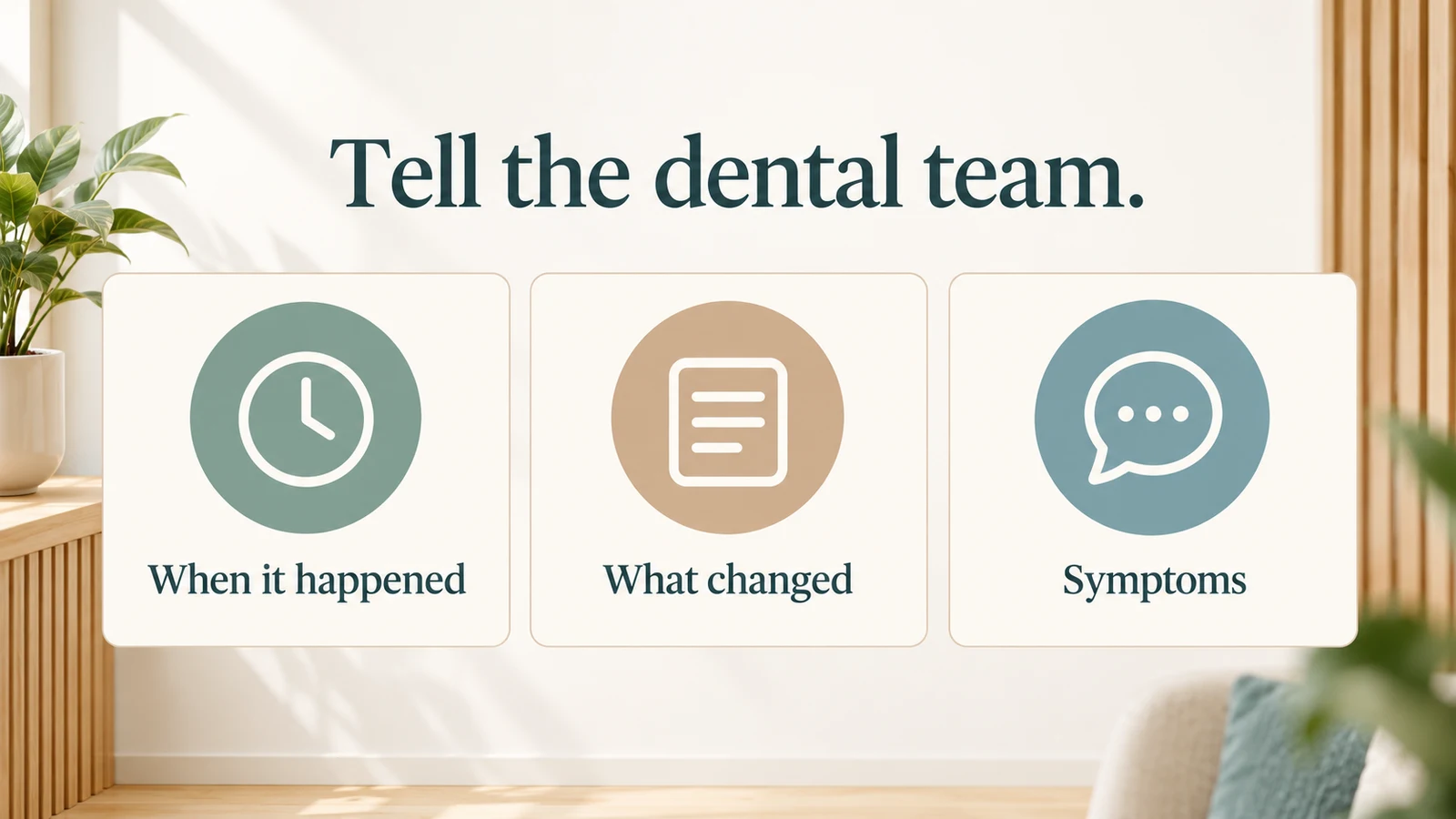
Explain what happened during the call
The office needs enough information to advise you on the next step. Describe the incident in ordinary words:
- When it happened and what you were eating
- Which area seems affected, if you can tell
- Whether a piece came away or an edge feels different
- Whether pain is constant, happens with chewing or comes and goes
- Any swelling, fever, bleeding or difficulty opening your mouth
- Whether that tooth has a filling, crown or previous treatment
Say if you cannot identify the tooth. Do not deliberately bite something hard or expose it to hot and cold drinks to make the symptoms easier to describe.
Do not use pain as a measure of damage
The American Association of Endodontists explains that cracked-tooth symptoms can vary and may come and go. A quieter period does not show that the tooth has repaired itself.
Different types and extents of damage need different care. An examination helps determine what is involved and whether a specialist should assess it. A photograph or your description cannot reliably establish crack depth.
Ask what the dentist has found, what remains uncertain and whether any additional tests are needed. Do not assume a crown is always the answer or that a tooth is automatically beyond saving.
Know when symptoms need faster help
Tell the dental team urgently about increasing swelling, fever, worsening pain or difficulty opening your mouth. If you cannot reach the office, seek another urgent dental-care service rather than simply waiting for the next routine appointment.
Breathing or swallowing difficulty, extensive mouth swelling, a swollen or painful eye, sudden vision problems, or substantial difficulty opening your mouth requires emergency medical care. These escalation signs are consistent with NHS guidance on serious dental-infection symptoms; they do not mean this article has diagnosed an infection.
Ask about protection and the next appointment
Once assessed, confirm what you can eat, how to clean the area, what to do about any appliance you wear and when to return. Follow the instructions for the treatment you actually received.
AAE guidance notes that a crack does not heal like a broken bone and that even a protective restoration cannot guarantee success. Ask about the outlook for your particular tooth rather than relying on a general promise.
Contact Brock Cameron, DMD promptly to describe the incident and confirm available care, or review its dental services. The office’s family-dentistry information discusses urgent needs, but appointment availability and treatment must be confirmed.

We use modern dentistry to help address your dental needs by always staying current with treatment options that help provide each unique patient with the care that they need.
Contact Us
675 Old Ballas Rd. Suite 205
St. Louis MO 63141
Call Us
Copyright © 2025 Brock Cameron DMD.